




Love Made Concrete: A $200 Loan That Rebuilt a Community, and Cities That Keep Their Doors Open
In the Philippines, an entrepreneur named Eddie faced the choice of borrowing at up to 120% interest or giving up his business — until a fair $200 loan through HOPE International's local partner CCT let his mobile store grow until he could build safe housing for his employees, mentor them, and open his home's ground floor as a gathering and worship space for the whole community. Meanwhile, communities across the United States spent this year's Welcoming Week (September 10–19) doing the quieter version of the same work, from King County's proclamation to daily themes in Erie, Pennsylvania, bringing neighbors of all backgrounds together around the conviction that newcomers belong. Between a loan without extortion and a front door left open, the world's oldest rule — love your neighbor as yourself — keeps showing up in the news.
"They make us better, and they bring out the best in us."
— Bruce Harrell, Mayor of Seattle
Reflection
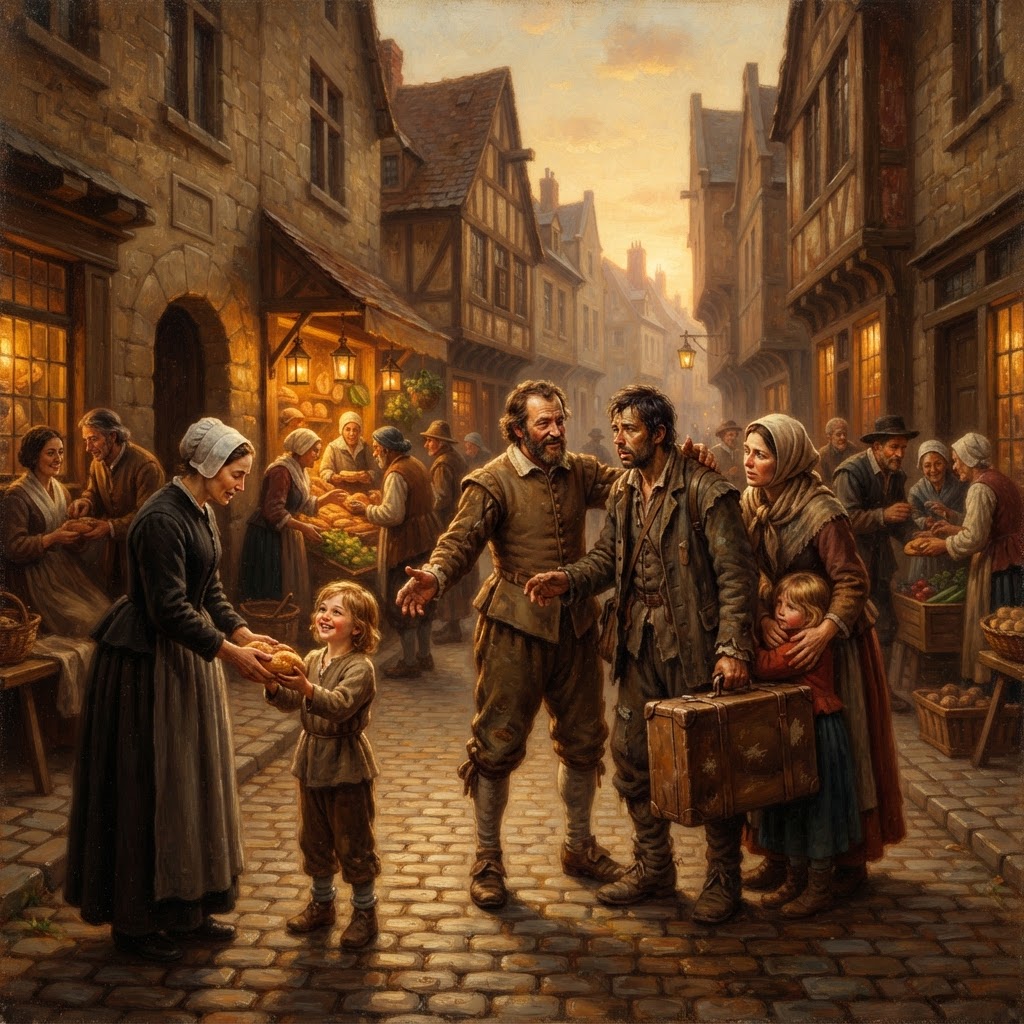
This Sunday's readings reduce everything to a single sentence: love God, and love your neighbor as yourself. But the ancient text refuses to stay poetic. It names names. The neighbor turns out to be the stranger in your land — because you were a stranger once yourself. The widow. The orphan. The poor man whose cloak is his only blanket, and who must get it back before sunset because it is all he has to sleep in. Love that refuses to get specific stays a greeting card; the moment it names the person in front of it, it becomes a practice. Eddie's story in the Philippines is what the practice looks like in modern dress. Where loan sharks demanded up to 120% annual interest — a rate designed, as one observer put it, to keep people in oppression rather than lift them out of it — the Center for Community Transformation offered a $200 loan at a fair rate, plus training and a place to save. Eddie's mobile store grew. Then the growth did the remarkable thing: it turned outward. He built safe housing for his employees, mentored them, and converted his home's first floor into a space for community gatherings and Sunday worship. A cloak returned before sunset is an ancient image; a spare floor given to the neighborhood is the same instinct wearing modern clothes. The same instinct showed up at city scale during Welcoming Week, when counties like King County formally proclaimed September 10–19 a time to find common ground with neighbors of every background, and cities from Erie to Tulsa and Lincoln hosted events to connect longtime residents with newcomers. Mayors describe skylines designed by refugee architects and airport workforces made welcoming by the very people who arrived seeking welcome. When a whole community decides that belonging is a policy and not an accident, the old reminder — you were once aliens yourselves — stops being a memory and becomes a habit. Taken together, these stories suggest that love of neighbor works at every scale: a $200 handshake, a spare bed, a county proclamation. None of it required heroic resources; it required someone willing to notice who was within reach. The question each of us is left with is disarmingly concrete: who is standing within arm's reach today, and what small thing could be returned to them before the sun goes down?